
This is the time of year when even those without a gift for gardening start to think about what they can grow to make their landscapes beautiful. Whether planting herbs, vegetables, or a variety of flora, everyone wants to look out their window and see something natural thriving. Everyone knows bees are a significant reason we have such a great variety of colors and harvests, whether growing wild outside or potted neatly along the patio perimeter. An easy way for anyone looking to beautify their landscape this year is to plant bee-friendly native species that support a balanced ecosystem. There is a native plant finder site that categorizes great options depending on zip code, and it is free! This summer, with a little forethought and planning, anyone can prove that if you plant it, the pollinators will come!
Welcoming Pollinators While Deterring Pests
The biggest question is, how to plant things that invite the insects and critters you want, but keep the ones you don’t at bay? Many don’t realize that using native plants can provide natural pest control against unwanted bugs and insects. However, it is also important to know that bees are part of a bigger group of pollinators that includes beetles and moths. So, expecting only beautiful butterflies and fat, fluffy bumblebees is not realistic. If you can open your mind to inviting and helping pollinators, and to a broader approach to helping the environment, it is easier to overlook that not everything in your garden is what you hoped for. However, inviting hummingbirds and squirrels into your landscape can minimize other pests like roaches and ants.
Planting in Pots and Planters
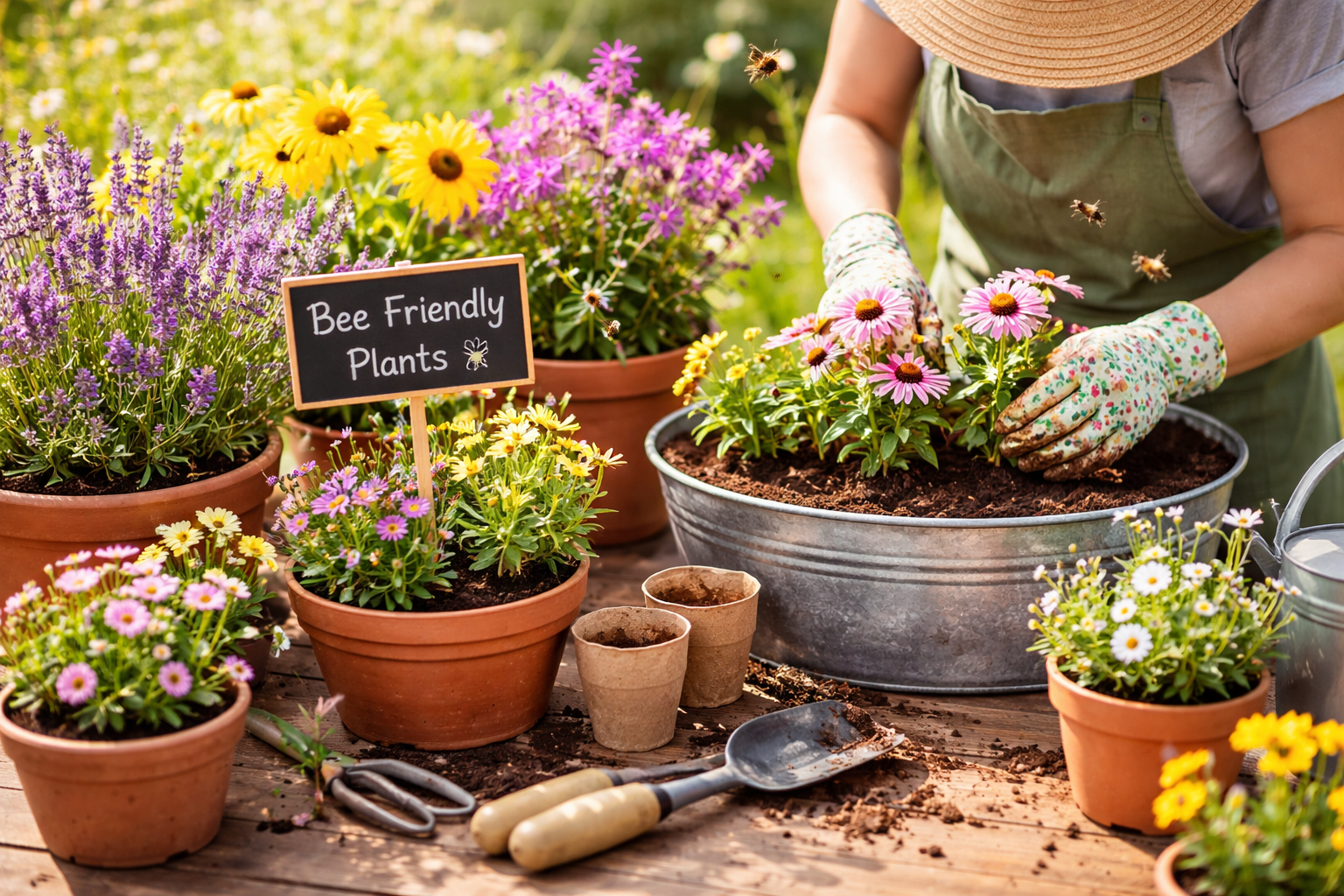
It is often misunderstood that people must have large open spaces in which to plant a garden and literally enjoy the fruits of nature. Using pots and planters is a great way to manage vegetables, including squash, lettuce, herbs, and tomatoes. Anyone can grow fresh ingredients, with the understanding that there will be flying insects around. If you plant it, the bees will come! Bees forage, and they will look for the closets source, so if you open your space up to the idea of growing some goodies this summer, embrace the unique opportunity to observe pollinators in their happy place. Bees are fun to watch, and even more rewarding when they are caring for your plants.
Lawn Mowers Slow Your Roll
It is so tempting to keep a short lawn during the summer. However, lawn owners don’t often realize they can have a significant impact on bee activity in their area. A small patch of wildflowers left to grow, or a broken tree limb left to become home to pollinators, can be meaningful. This summer, if everyone with a yard could intentionally designate space for healthy pollinator activity, they would see greater plant diversity and healthier plants over time. Allowing bees and other pollinators to have their way, with plenty of sources for foraging, everyone reaps the rewards.
A Shift from Perfection to Balance
As awareness of bees, their contributions, and the major threats facing the species grows, more and more people want to know how they can help. Many are surprised to find that the more they let things take their course in planting, gardening, and landscaping, the more they support the natural course for bees and other pollinators. Even beekeepers recognize that their care is not a perfect process. Beekeepers must continually adapt and monitor their hives to ensure they are safe, healthy, and have what they need.

Get help with your beehive or bee swarm removal! Call Today 760-224-3040 Or 951-265-8292!
How to Treat Unwanted Bees
It is inevitable that a beehive may end up in a location where it can’t stay. Whether a home, shed, or area where their hive poses a threat to people, some hives must be moved for one reason or another. How we treat these hives is critical and should never be dismissed as something that can be handled by spraying pesticides and just killing them. Using pesticides in your area can cause more damage than you know. Only professional and skilled beekeepers have the equipment to humanely remove bees by putting them into a suber state, vacuuming them up, and moving them away. If a hive exists and honeycomb and remnants must be removed, leaving them will attract other pests like ants and roaches. So, if you need a beehive removed, don’t call the exterminator. Instead, contact your local beekeeper and have them either come to remove the bees or refer you to someone who can remove them and handle any post-removal repair work.
In a perfect world, people would find ways to embrace bees through their gardening, planting, and lifestyle choices. Bees and people can live harmoniously, and they should because the relationship is mutually beneficial! Choosing bee-friendly plants, placing water sources out for bees, and treating them with respect are a few ways anyone can help build this relationship. If you plant it, they will come.