
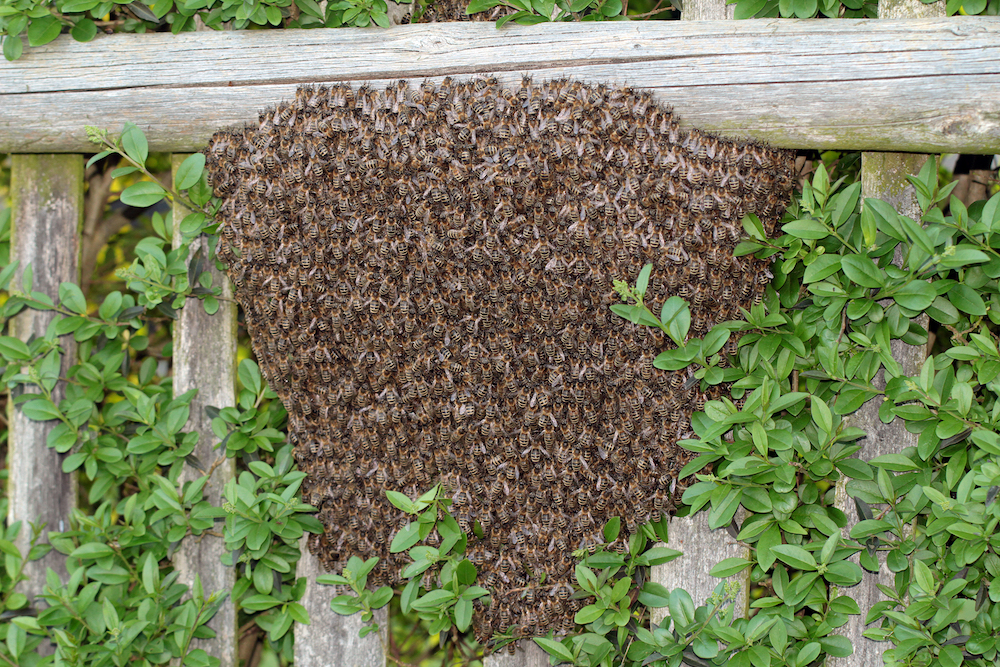
If you witness bees swarming in 2026, this is a good sign! Swarming is a completely natural behavior among honeybees when a colony splits, which can occur for various reasons. Bees swarming indicates colony growth and confirms the honeybees are healthy enough to go in search of a new location. When people come face-to-face with swarming bees, especially when they end up on your property or in your path, the initial feelings may be fear, but swarming bees left undisturbed are rarely aggressive and are in a temporary spot as they seek a new permanent location. However, when people have allergies or feel that the swarm's location puts them at risk, a professional bee removal company can safely and humanely encourage them to move on.
When possible, swarming bees should be left alone to move on naturally. They will often stay in these swarm locations for a few hours, but in some cases, they may remain for a day or two. Last year, the news covered many stories of inconvenient swarm locations, such as airplane wings on the tarmac and baseball field lights. As we ramp into the warmer seasons of spring, swarming is certain to occur. Swarming is most common in the spring and summer because after a long winter break, colonies begin their activities, and the growth of the colony is at its peak. Additionally, bees are more active in warmer weather, allowing them to move around and look for a new space to establish a hive. Beekeepers may provide additional hives or supers near their apiary to encourage swarming bees to stay close, but even the best laid plans don’t always work out favorably for the beekeepers.
Why Bees Swarm in the First Place
Different factors have been identified as initiating swarming, including a growing colony, the presence of resources, weather, and beekeeper efforts. The most common reason honeybees will swarm at the beginning of a new year is that the hive is getting too crowded for the growing number of bees. Overcrowding prompts bees to follow a sequence of behaviors that begins with raising a new queen to stay with the hive in its current location, while the seasoned queen leaves and finds a new home.
Worker bees work diligently to find a new location, then perform a well-known waggle dance to indicate to the swarm that they have found the perfect spot for their hive. Once this location is determined, the bees naturally swarm to the new spot, and the reigning queen continues to do her task of producing more baby bees. In this situation, there are now two hives instead of one, showing a healthy bee population in the area. As mentioned, beekeepers familiar with bee behaviors may place hives in the area or add supers to existing hives to allow for growth without swarming. The last thing a beekeeper wants is for all their honeybees to move away!
A lack of food, water, and pollination options constitutes another major reason bees swarm. Limited nectar and pollen resources may send bees swarming, as they need them to survive. Urban development and other external environmental aspects can diminish these essential resources, prompting bees to seek a new home. The time of year and harsh winters can also trigger bees to swarm in the early new year, which is why some beekeepers may supplement natural sources with sugary water to give bees the energy and food they need to keep going until they can naturally forage and flowers are starting to bloom.
Managing the Hives
Seasoned beekeepers have witnessed swarming, and their task of managing hives is never done. Bee behaviors, environmental changes, and other factors make beekeeping a year-round job! As mentioned, beekeepers may add supers to their hives to allow for growth or supplement bee resources in cold weather. Beekeepers are also incredibly helpful in moving swarms through safe, humane capture, using equipment to collect swarming bees and return them to the apiary. It is critical to have only experienced bee removal experts address a swarm, because multiple stings can land anyone in the hospital. Even with beekeeping equipment, bees can sting through, which is why only those with the knowledge and equipment should approach a swarm of bees. Beekeepers are often happy to collect a swarm to prevent colonies from establishing in unwanted places, such as attics and other areas that pose a risk to people and pets.

Get help with your beehive or bee swarm removal! Call Today 760-224-3040 Or 951-265-8292!
Work with Swarming Experts in 2026
As we move into a new year, witnessing swarming bees is an encouraging sign of a balanced ecosystem and a healthy honeybee population, so don’t fear! If a swarm occurs, it can be concerning when it is close to your home, business, or local park. Contact a reputable and humane bee removal company like D-Tek Live Bee Removal. Owned by a knowledgeable beekeeper, D-Tek gently and professionally removes bee swarms and hives from unwanted locations. Regardless of your bee concern, D-Tek is the one to call.
Contact D-Tek today at 760-224-3040 for any questions, concerns, or information about bees in your area!