
Everyone agrees that bees play a vital role in pollination, which in turn plays a critical role in the world’s food production. It is hard to imagine that everything rides on one bee in each hive, which is why the role of the queen bee can’t be overstated. Although honeybee queens are social bees, and solitary bees also brood baby bees, the honeybee is one of the most researched and recognized species of bees. The queen bee is critical to the hive’s survival, and they are solely responsible for laying the next generation of bees. IN fact, her only role is to continue to produce a lifetime of eggs to ensure the survival of the species, so all hail the queen bee!
Hive and Ecosystem Health
It is typical to discuss the queen bee and her essential role in hive health. The hives' health is directly connected to her well-being and her ability to continue producing eggs. However, bees also play a role in balancing the ecosystem. As pollinators, bees help diversify the flora, and their pollen dispersal helps germination progress. All this on top of the obvious job of encouraging growth, fruit, and blooms from nearby plants, trees, and flowers.
The Queen Bee Is in A Mood
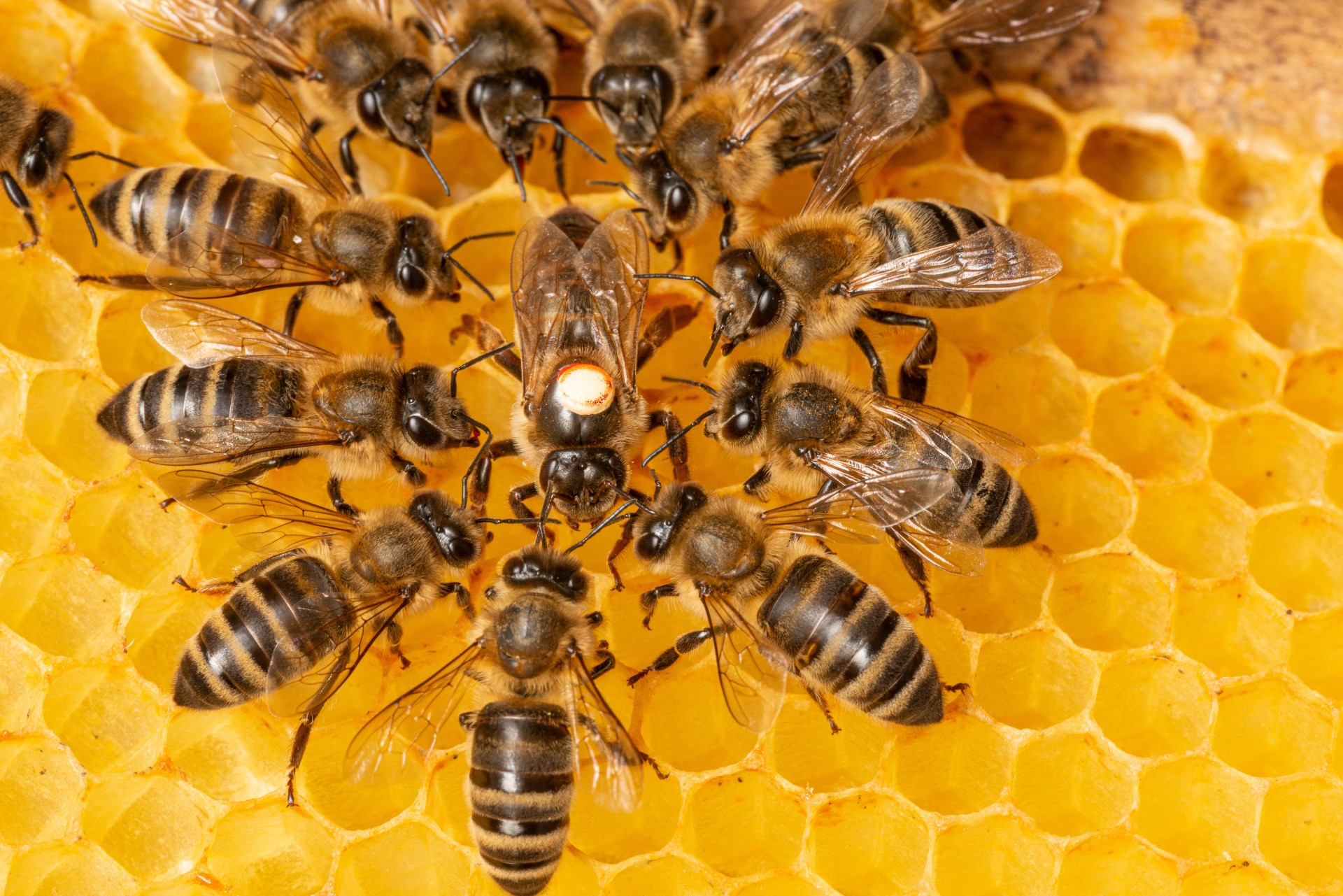
When the queen bee is in a mood or needs something, every other bee in the hive knows it. Queen bees dictate the mode of each hive through a unique pheromone that communicates with other bees. This scent lets her worker and nurse bees know what she needs, and this olfactory communication keeps all the bees within the hive working harmoniously. The queen bee of each hive does not forage for herself. The worker bees are responsible for her well-being, including cleaning her, feeding her, and ensuring all her needs are met. A subtle signal from the queen shifts the hive's behavior to accommodate her changing needs. In the heat of summer, worker bees use their wings to cool the hive, and in winter, bees group together to increase the hive’s temperature. The queen bee is genuinely the leader of her hive, and the rest of the bees depend on her for their survival.
Additionally, as this pheromone begins to decline, the bees in the hive will swarm and start brooding a new queen to take over because it indicates to them that the queen is no longer able to sustain the number of bees that are necessary to ensure the hive’s survival. The fact that the queen bees will lay upwards of 3,000 eggs a day is astonishing. Her sole focus to keep the colony growing is true dedication to her species. However, she must yield when her time is coming to an end, and a new queen is chosen. The new queen is made, not born, as some would say. The feeding of royal jelly to the chosen brood forms a new queen, and this jelly is responsible for ovary development, allowing them to successfully take over the role of keeping up the number of new eggs each day.
The Queen Bees’ Love Life and Life Span
Although the position of queen bee sounds regal, the queen typically has a shorter life span than the others. The average age of a queen bee is two years, and her only job is to lay eggs. She mates once in flight after being designated as the new queen, and that one interlude results in a lifetime of egg laying. Queen bees, although they may be freed from some of the daily tasks of foraging and hive keeping, their task is much greater and surely just as exhausting. The queen bee’s stinger is not used, largely because she is protected in the hive by her bee subjects. The queen’s stinger can be used multiple times, whereas the drones and workers can only sting once. In rare queen bee-to-queen bee combat, the stinger can be used repeatedly. This battle royal is a scene out of a movie, as the new queen (also the baby bee of the reigning queen) will kill the mother bee and the other potential queen bees that didn’t make the final cut. This has only been observed by a select number of beekeepers, but when it is caught on video, it is astonishing to watch.

Get help with your beehive or bee swarm removal! Call Today 760-224-3040 Or 951-265-8292!
To Swarm or Not To Swarm
A typical bee behavior when a new queen takes over is swarming. Although this can be alarming at first, it is purely natural and an expected behavior. If you have concerns about bees in your area that may be swarming or building a hive, please contact a local beekeeper. Bees are protected in California, and treating them humanely, whether during swarming or during hive removal, must be upheld.
Contact D-Tek today at 760-224-3040 for all your bee questions, concerns, or inquiries!